Porphyry Paving and Embodied Carbon: What the EPD Tells You
When sustainability is part of the specification process, it helps to have figures that can be traced back to a recognised source.
Porphyry paving has an embodied carbon figure of 27.73 kg CO2e per tonne. This figure comes from a published Environmental Product Declaration (EPD), rather than a general sustainability or marketing claim.
For context, typical published figures range from 90 to 170 kg CO2e/t for concrete pavers, 180 to 300 kg CO2e/t for clay and 450 to 800 kg CO2e/t for porcelain.
At the lower end of these ranges, porphyry’s figure is approximately one-third of concrete and around one-sixteenth of porcelain.
-edit.jpg)
Understanding the Comparison
These figures provide useful context, but they should not be treated as a direct like-for-like comparison with every competing paving product.
If you are using embodied carbon figures in a specification or report, check that the EPDs being compared follow the same standard, EN 15804+A2, and use the same reporting unit.
Porphyry’s figure is reported per tonne. Many paving EPDs use figures per square metre, so a direct comparison cannot be made without first converting them to a common unit.
For information being presented to a client or certifier, always refer to the relevant source EPDs rather than relying on general industry ranges.
.jpg)
What Does the 27.73 kg CO2e Figure Include?
The 27.73 kg CO2e per tonne figure is measured from “cradle to gate”. It covers quarrying the stone, transporting it around the production site and splitting and cutting it into pavers. The calculation stops when the finished product leaves the factory.
It does not include shipping to Australia, transport to the project site, installation, sealing or ongoing maintenance.
Projects requiring a cradle-to-site or whole-of-life assessment will therefore need to account for these additional stages separately.
Why Is Porphyry’s Embodied Carbon Relatively Low?
The way porphyry is produced plays an important part in its embodied carbon figure.
Unlike clay and porcelain, porphyry does not need to be fired in a kiln. It also does not require cement production, as concrete paving does. Once quarried, the stone is split and cut mechanically into the required paving formats.
Most of the reported emissions therefore come from the fuel and electricity used during quarrying, splitting and cutting.
According to the EPD, the embodied carbon is divided between the main production stages as follows:
| Stage | kg CO2e/t | Share |
|---|---|---|
| Quarrying | 9.42 | 34% |
| Transport within the site | 0.008 | ~0% |
| Splitting and cutting | 18.30 | 66% |
| Total | 27.73 |
This helps explain the difference between porphyry and paving materials that require energy-intensive firing or cement production as part of their manufacture.
Other Environmental Figures in the EPD
Carbon is not the only environmental measure covered by the EPD.
It also reports water use of approximately 0.27 m³ per tonne and non-renewable energy use of around 465 MJ per tonne. These figures may be useful for projects where sustainability reporting extends beyond embodied carbon.
An end-of-life credit of minus 3.11 kg CO2e/t is also reported. This reflects the potential for porphyry to be lifted and reused rather than sent to landfill. In accordance with the reporting standard, this figure is shown separately and is not included in the headline 27.73 kg CO2e/t figure.
Some rating pathways may require more detailed environmental information, including fossil-only carbon or water scarcity data. These figures are not included on the summary sheet, so speak with our team if your project requires additional information.
-edit.jpg)
Using the EPD When Specifying Porphyry
An EPD provides useful environmental data, but it is only one part of specifying paving for a project. It does not tell you how the stone will perform in a particular application or how the finished paving will look.
Before presenting or specifying porphyry for a project, it is worth having:
- the full EPD rather than relying only on summary figures
- the per square metre carbon figure for the thickness being specified
- slip resistance data for the selected finish
- relevant thickness tolerances
- a physical sample or, where possible, the opportunity to view the stone across a larger laid area
For the per square metre carbon figure, speak with our team rather than calculating it using an assumed density. This helps ensure the figure used in your documentation is consistent with the declared product information.
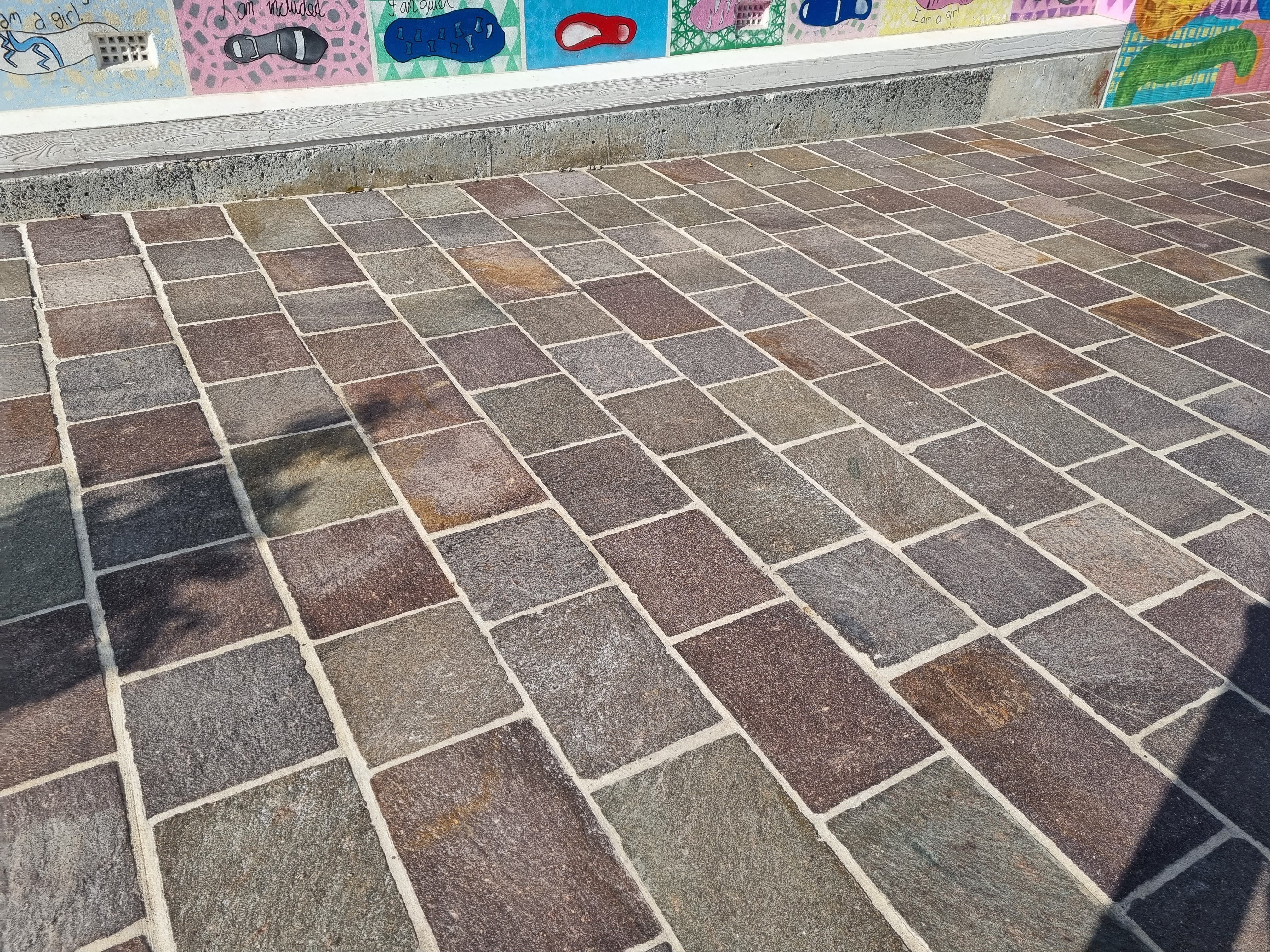
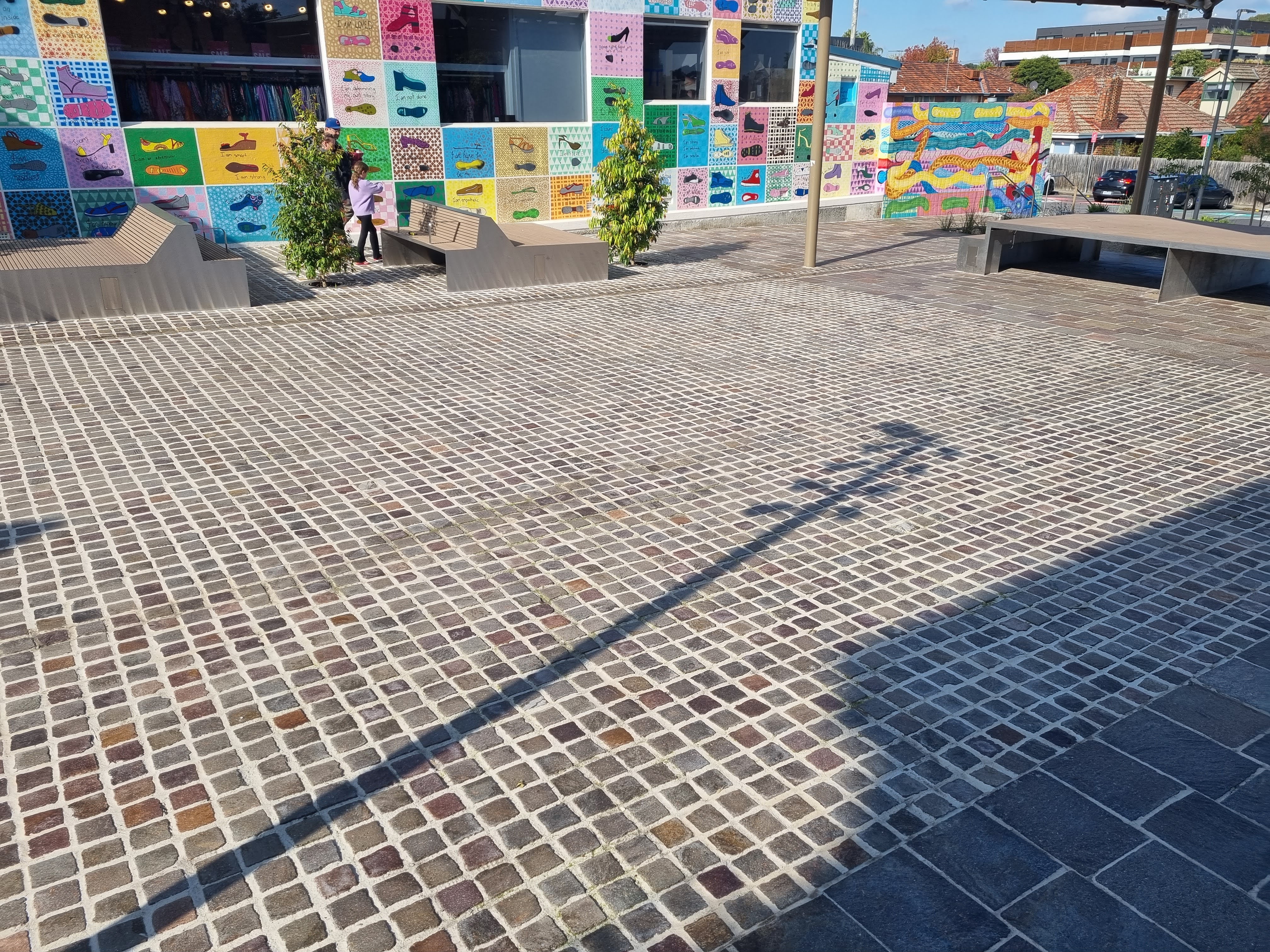
Natural stone also varies in colour and pattern from piece to piece and pallet to pallet. Looking at a larger area gives a much better understanding of that natural variation than a single sample alone.
For specifiers, seeing this variation firsthand can also help when defining the required finish and acceptable colour range for a project.
Get the EPD and See the Stone
If you are considering porphyry for an upcoming project, ask our team for a copy of the full EPD.
You can also visit our Oakleigh East showroom to see porphyry on a larger scale and compare its natural colour, finish and thickness in person.
Our showroom is open Monday to Friday from 8:30 am to 4:30 pm and Saturday from 9:00 am to 3:00 pm.
Related Reading: