Choosing Natural Stone for Your Pool Area
Once the pool goes in, you live with the surface around it for years, barefoot, wet, in the middle of an Australian summer. It's the part of the project people spend the least time thinking about and the part they notice every single day afterwards. Get it wrong and you're stuck with a surface that's slippery when wet, scorching underfoot by 2pm, or looking tired within a few years. Get it right and it barely crosses your mind, which is exactly the point.
This isn't really a tiles-versus-stone decision. It's about how your family will actually use the space, on a normal Tuesday afternoon and again in ten years, and natural stone earns its place when you think it through properly rather than just picking on looks.
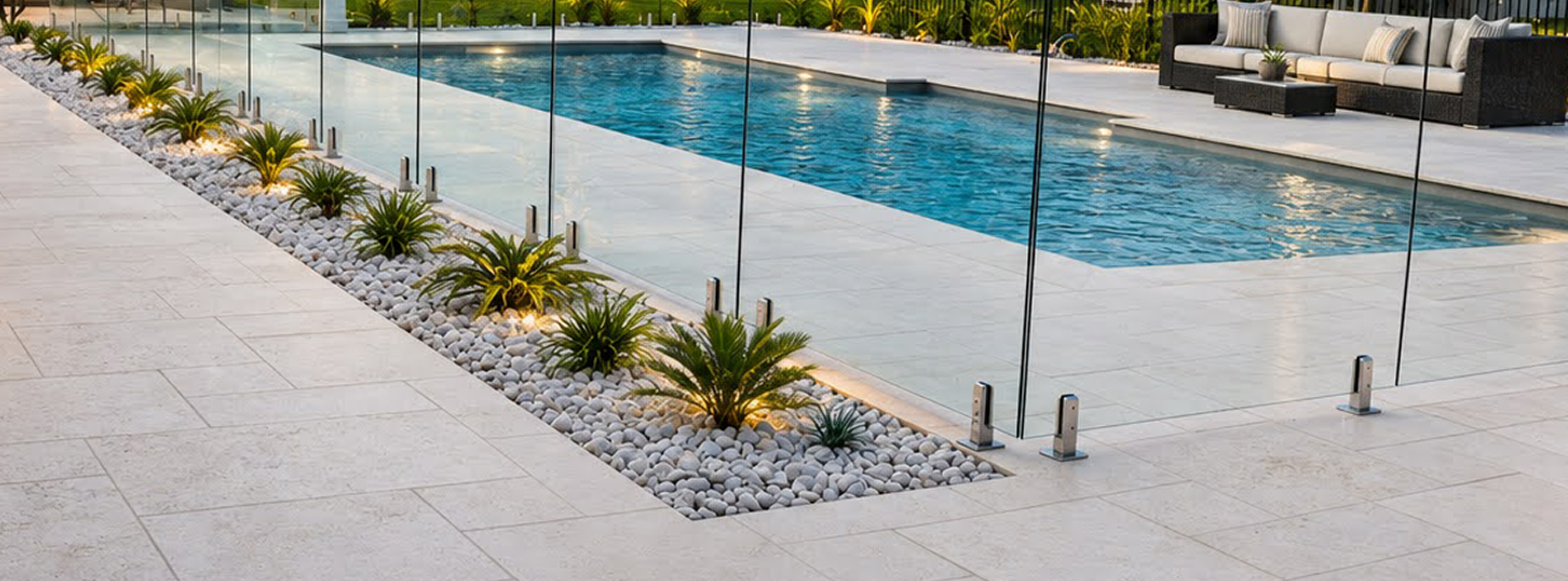
Built for water, salt and weather
Pool surrounds live in a demanding environment: chlorine, salt systems, splash-back, sun exposure and the occasional storm. The right natural stone, selected with these conditions in mind, can provide a durable surface that ages with character over time. It's a material that settles into a landscape rather than feeling separate from it.
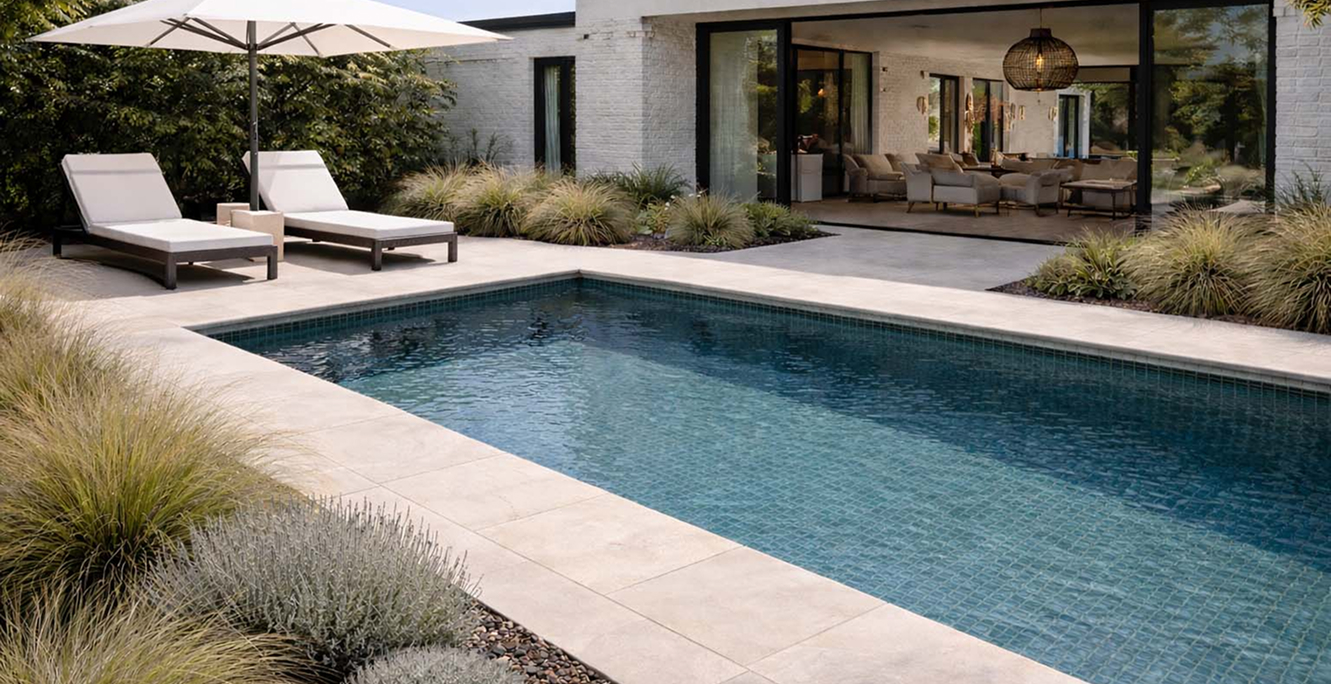
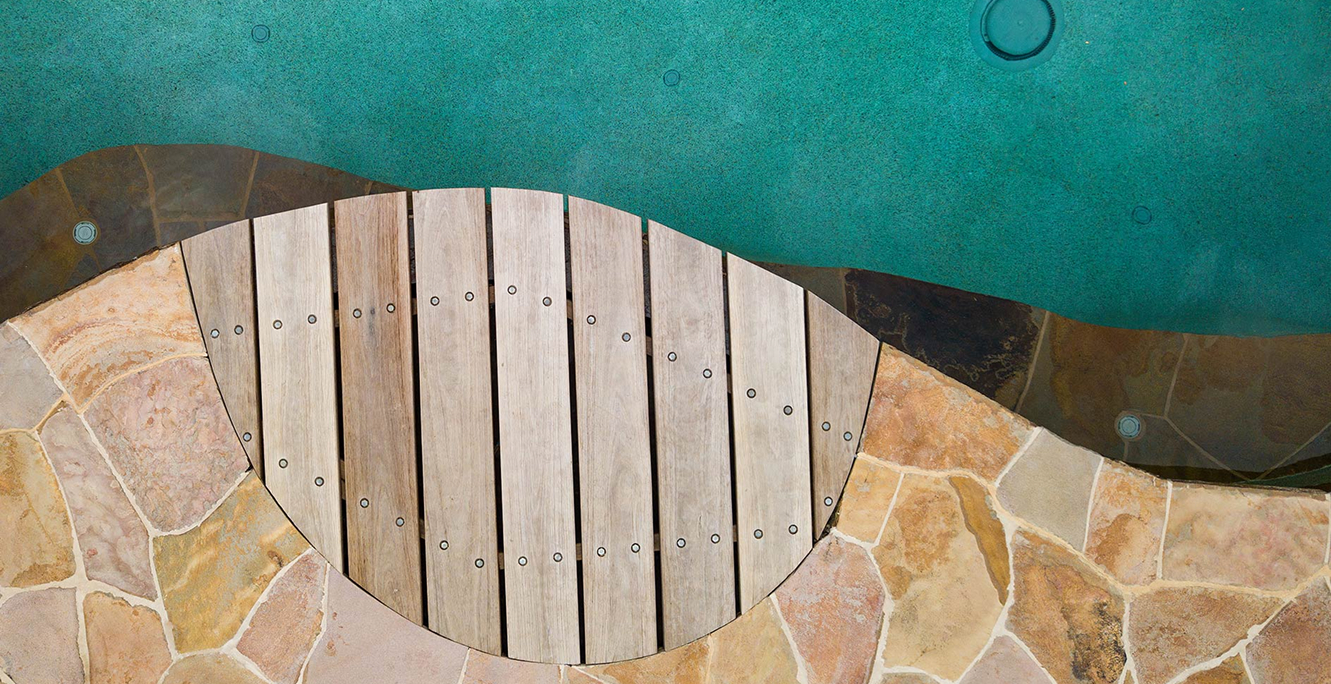
Coping, edges and the feel of the whole space
The detail at the pool's edge, the coping, does more than finish the job. It sets the tone for the whole area, whether that's a crisp, architectural line or a softer, more organic edge that blurs into garden and landscape. This is where stone's tactile qualities really come through: the way light catches a textured surface, the warmth of a natural tone against blue water, and how the stone works with the surrounding landscape.
Choosing with the whole space in mind
The right stone for a pool area isn't just about specification sheets. It's about how the space will feel on a Tuesday afternoon in February, and again in ten years' time. We'd encourage anyone planning a pool surround to think about grip, heat, durability and character together, rather than in isolation.
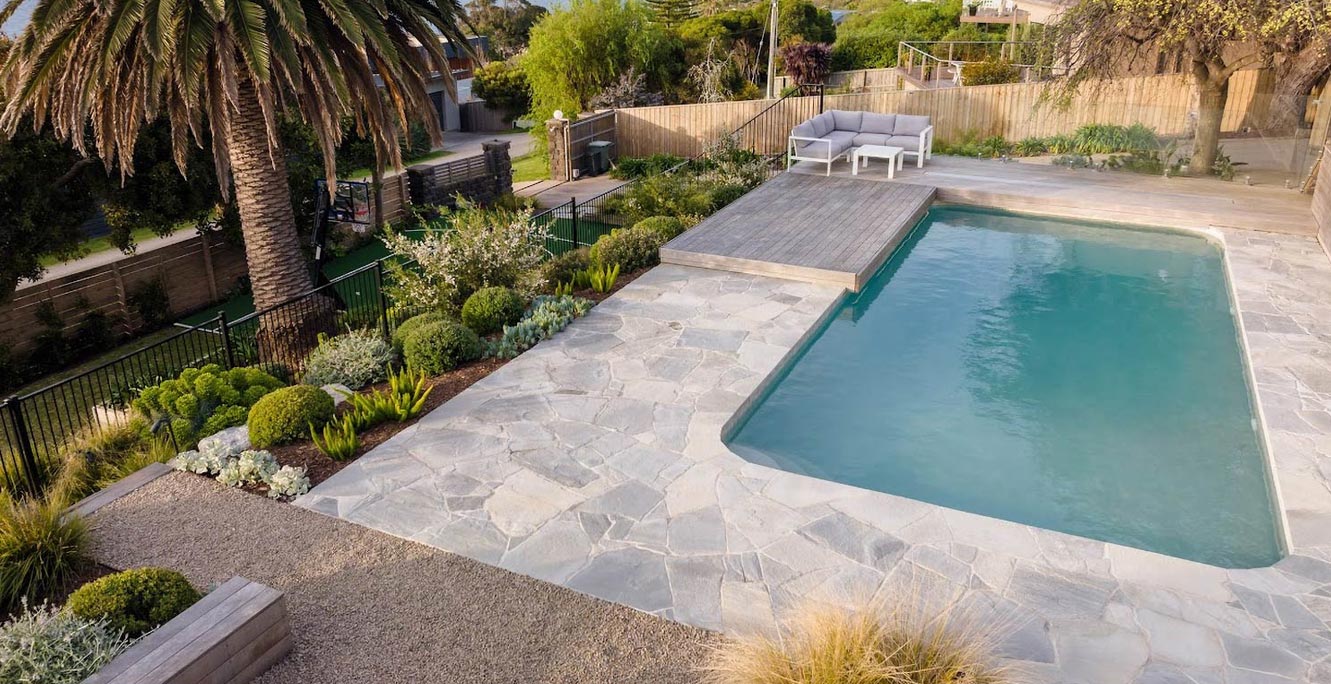
Underfoot comfort matters more than it looks
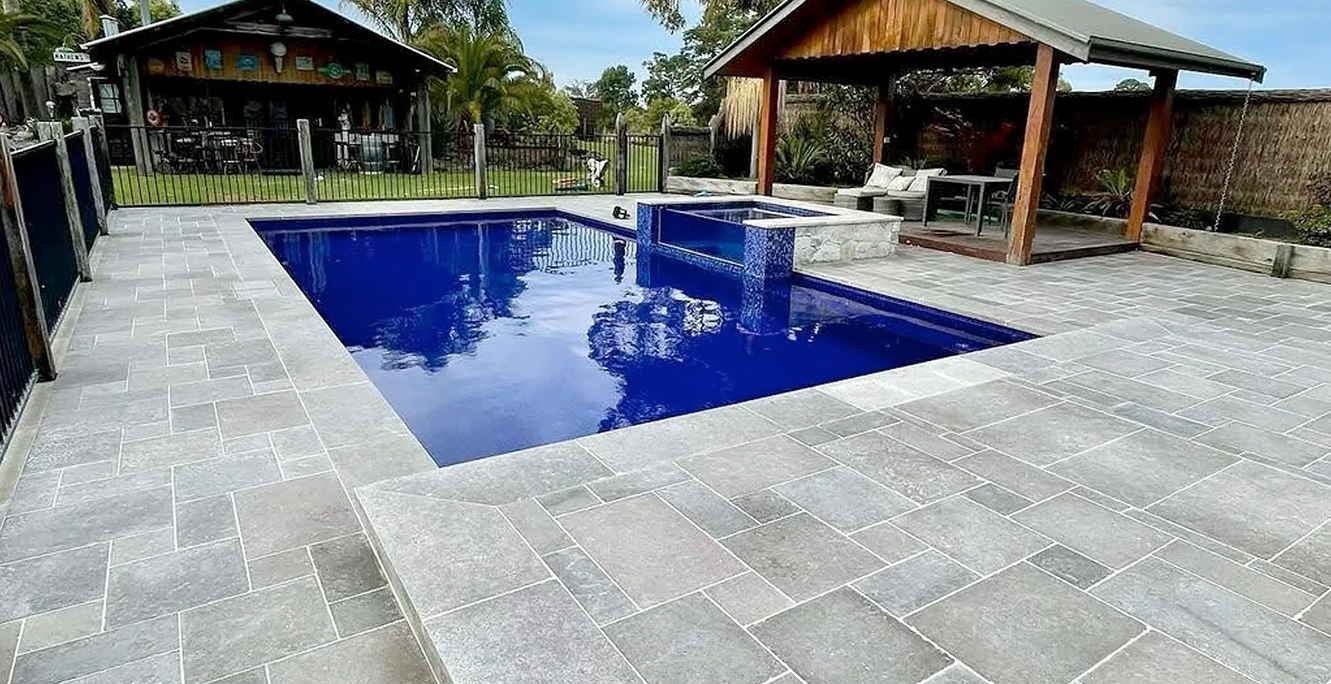
A pool area is walked on wet, barefoot, and often in a hurry. Children are running around, guests are coming and going, and people are stepping straight out of the pool. Slip resistance isn't a technical afterthought here; it's part of how safe and relaxed a space feels. Natural stone with a honed, textured or split-face finish offers reliable grip, even when the surface is wet. This makes it a practical choice around pools, where a polished sheen can work against the setting.
Heat underfoot, and comfort in the Australian sun
Australian summers ask a lot of outdoor surfaces. Darker, denser materials can hold heat through the afternoon, while lighter stone tones tend to stay more comfortable underfoot during the hottest part of the day. It is worth considering this early in the design process, particularly when thinking about how and when the space will be used and whether the pool area gets a lot of afternoon sun.
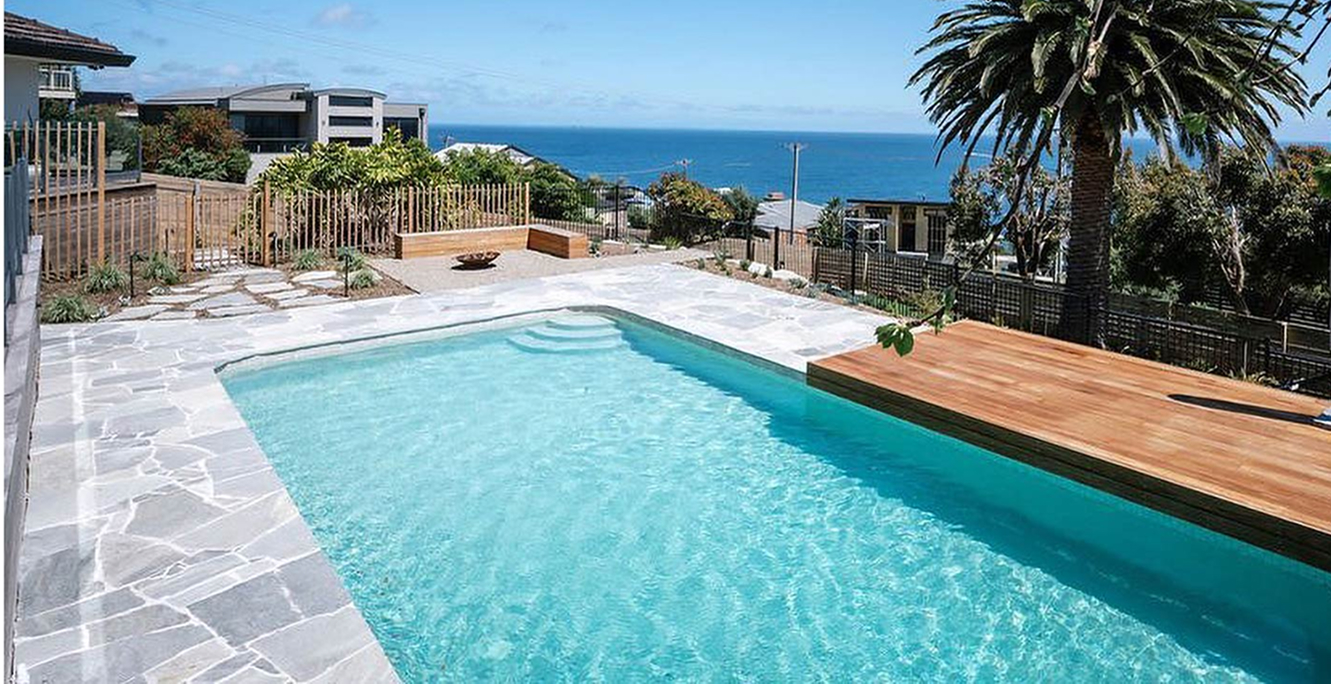
If you're considering natural stone for a pool project, our team is glad to talk through the options for your site, climate and design. Order a sample, see it in your space, and get a feel for how it might shape the way you use the area for years to come.