The Story Behind Castlemaine Slate & Stone Quarry
Tucked into the hills just north of Taradale in Central Victoria lies one of the region’s most distinctive natural stone sources, the Castlemaine Slate & Stone Quarry.
Its story began in 1953, when Ray Multby first discovered a small vein of a unique layered stone. From these humble beginnings, the quarry grew into a well-known supplier of natural stone used in landscaping and building projects across Victoria.
For more than five decades, Ray and his sons worked the Castlemaine quarry, gradually building a reputation for producing a distinctive stone product that would become widely recognised throughout the state. In 2005, the quarry entered a new chapter when Yarrabee took ownership establishing Yarrabee & Castlemaine Stone Solutions and continuing the legacy of this remarkable site.
A Stone Formed by Nature
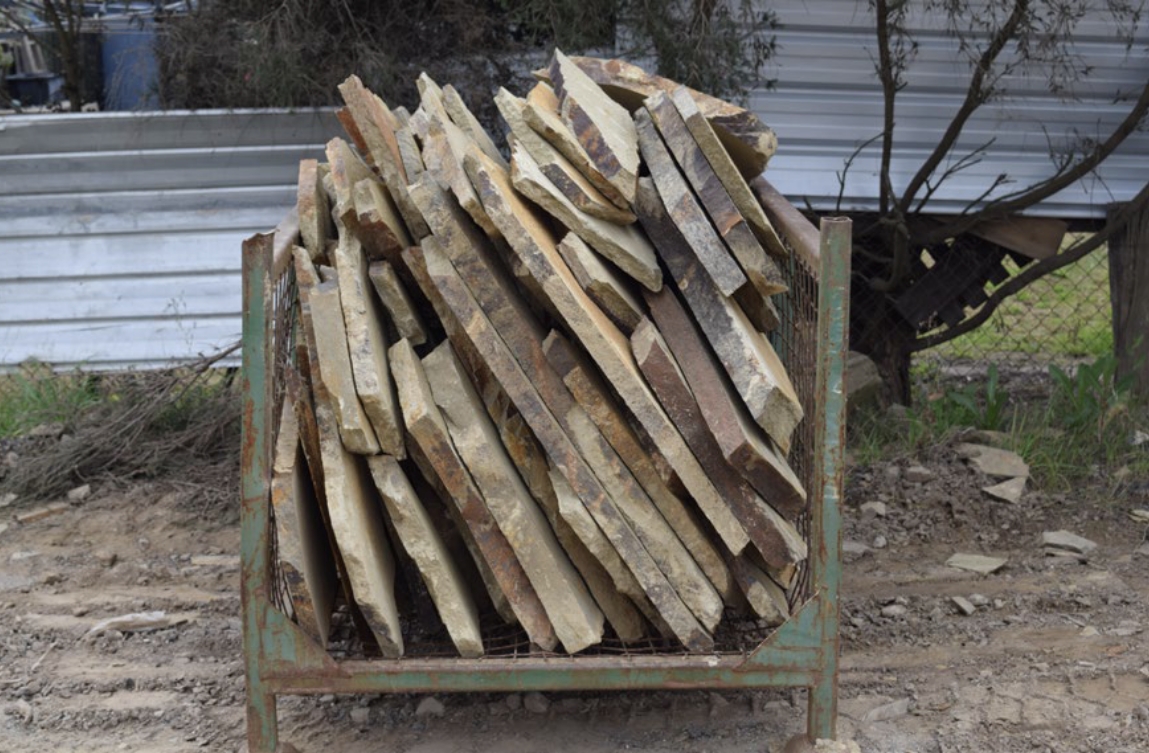
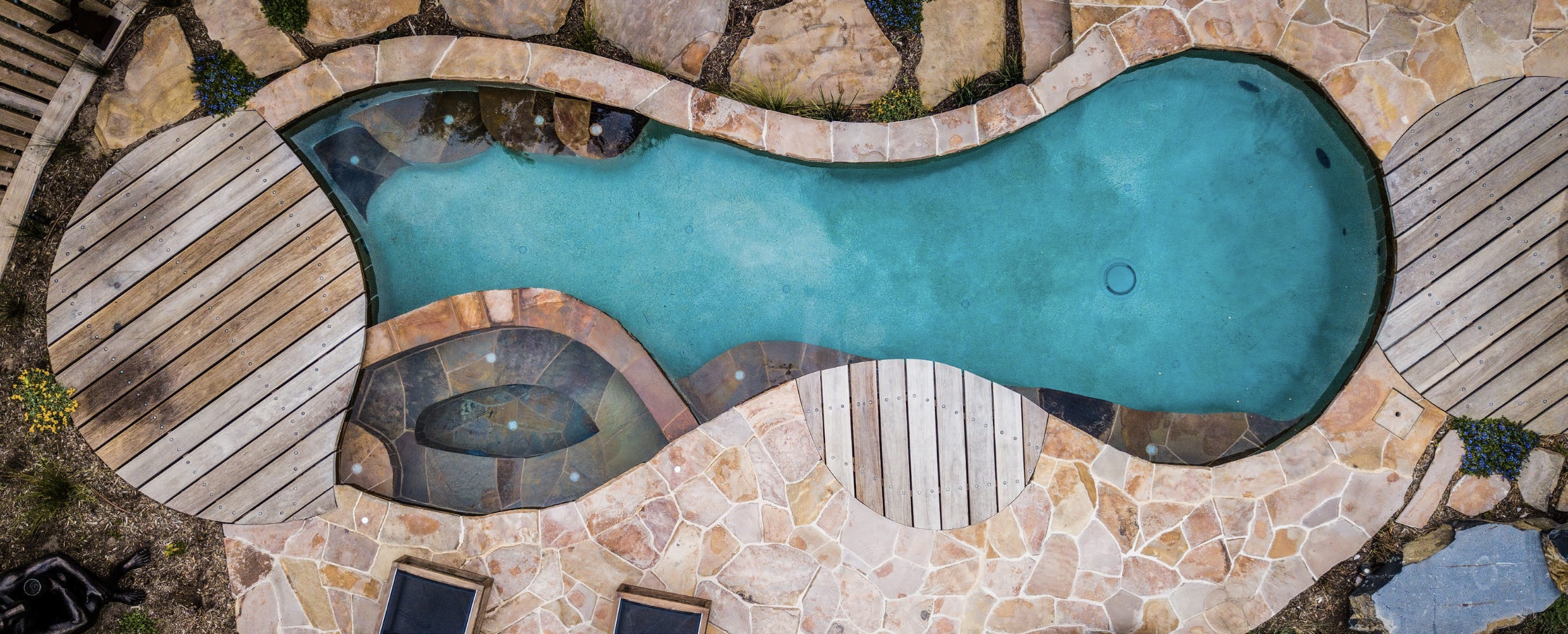
Castlemaine stone naturally forms in layered sheets known as laminates. These layers vary in thickness, which allows large portions of the quarried rock to be split into what is now widely known as Castlemaine random paving.
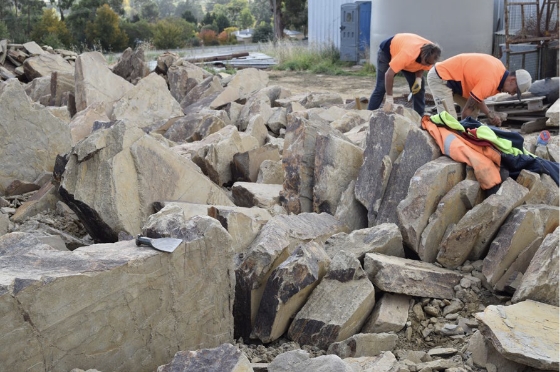
Historically, extracting the stone involved carefully controlled black powder charges. These gentle blasts would open natural faults within the rock face, allowing large slabs to separate from the quarry wall. Today, modern machinery has largely replaced this method. Excavators equipped with heavy hydraulic hammers can achieve similar results while improving efficiency and safety.
Once removed from the quarry face, the stone is broken into manageable pieces and transported to the Taradale yard for further processing.
Traditional Methods Still in Use
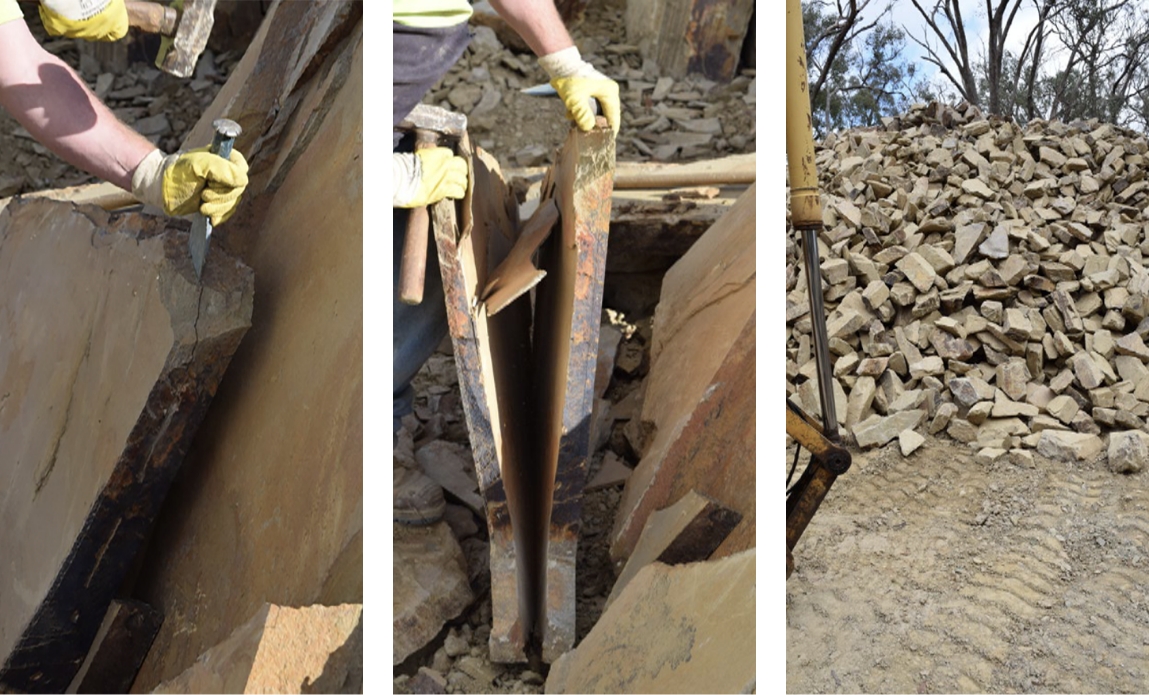
Although machinery has improved the extraction process, one aspect of production remains largely unchanged since the 1950s. The stone is still split along its natural layers by hand using a coal chisel and mash hammer — the same technique used by the Castlemaine rock quarry’s original workers.
Each piece of stone contains laminates ranging from around 10mm thick to as much as 200–300mm. Pieces thinner than 70mm are typically sorted into paving. To maintain consistency for installers and contractors, the paving is carefully separated into thickness ranges such as:
- 10–20mm
- 20–40mm
- 30–40mm
- 40–50mm
By grouping similar thicknesses together, Yarrabee ensures that projects receive stone that is easier to install and produces a more even finish.
Working With Natural Variability
One of the challenges of working with natural stone is that the thickness of the layers cannot be known until the stone is split. A single piece might produce thin paving pieces, thicker slabs, or a mix of both. Because of this natural variation, production estimates are often based on averages rather than exact predictions.
This unpredictability is part of what makes natural stone unique — each piece is shaped by geology rather than manufactured to a standard template.
From Quarry to Walling Stone
Not all stone splits neatly into paving. Pieces that are unsuitable for paving are instead sorted into various walling products.
Spalls are the highest-quality walling pieces. They feature relatively flat top and bottom surfaces and a vertical face, making them ideal for premium stone walls.
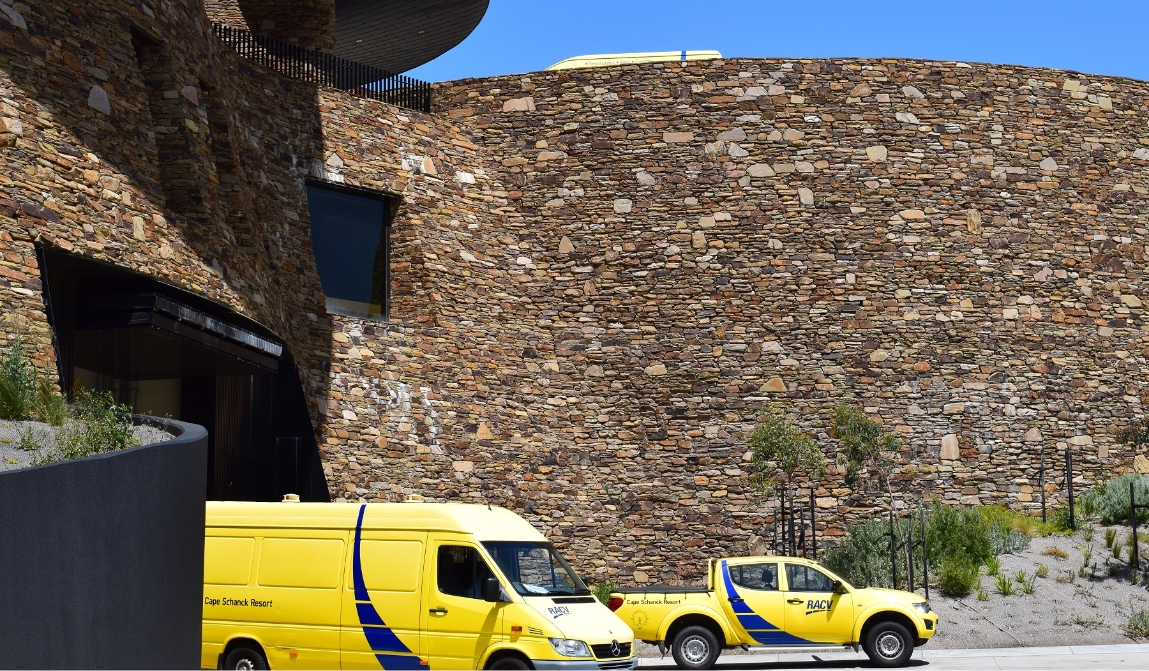
Pieces that are slightly less uniform are categorised as Builders Wallers. When combined with Spalls, they form Country Blend, a popular walling mix used in major projects. One notable example is the impressive stone monolith at the RACV Resort in Cape Schanck.
Another product, Strata Walling, is a smaller version of the Spalls. These pieces are typically used for interior applications such as fireplace surrounds. They are sawn at the back to a maximum depth of 130mm to make installation easier.
Smaller fragments of the same stone are often used in gabion baskets, creating striking structural and landscape features.
Nothing Goes to Waste
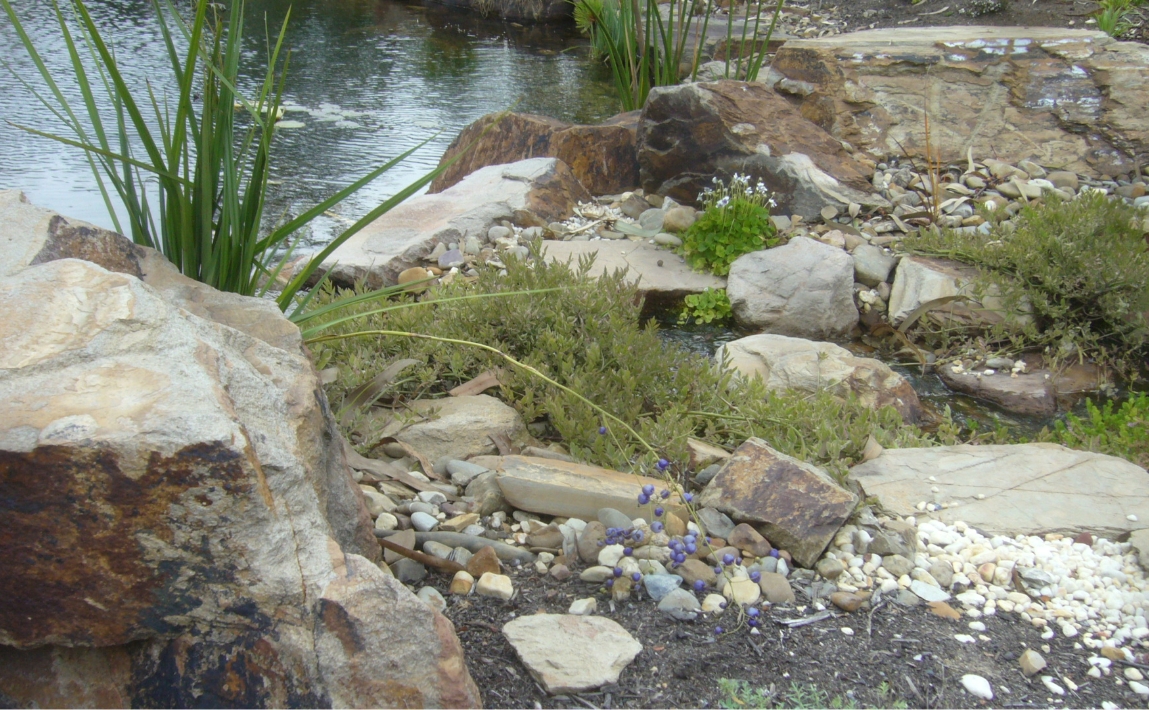
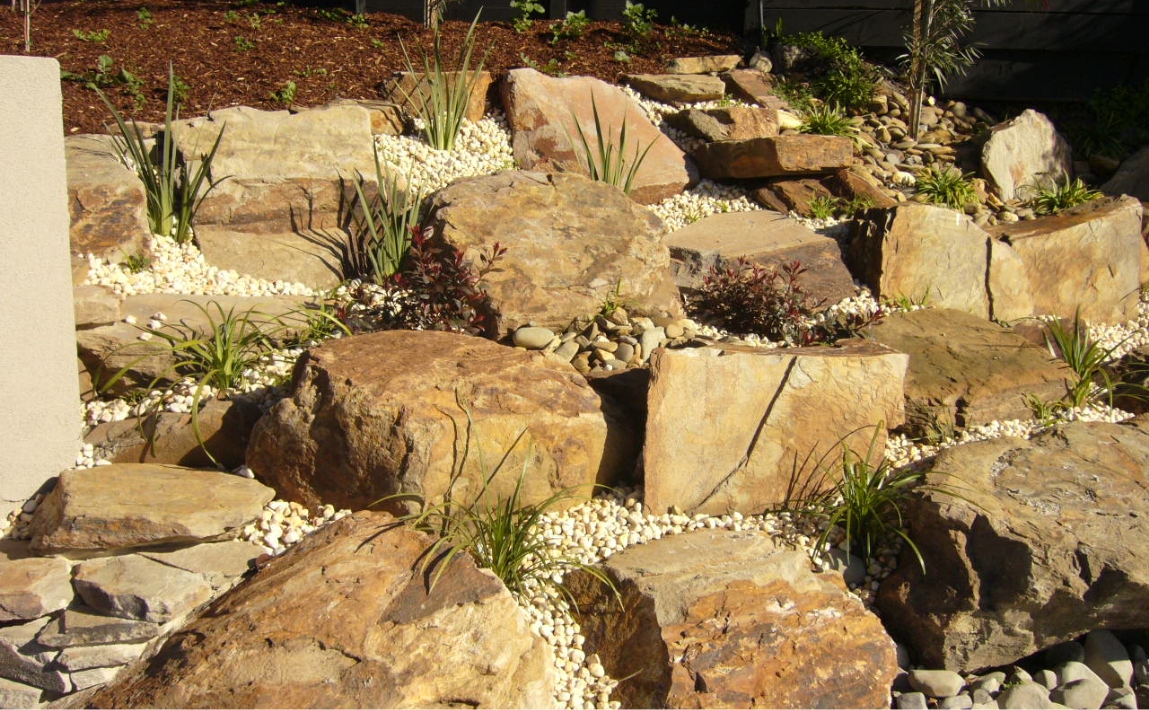
After paving and walling products have been sorted, any remaining large pieces that cannot be split are used as landscape rocks. These natural boulders are ideal for feature landscaping, adding texture and structure to outdoor spaces.
A Quarry with a Long Future
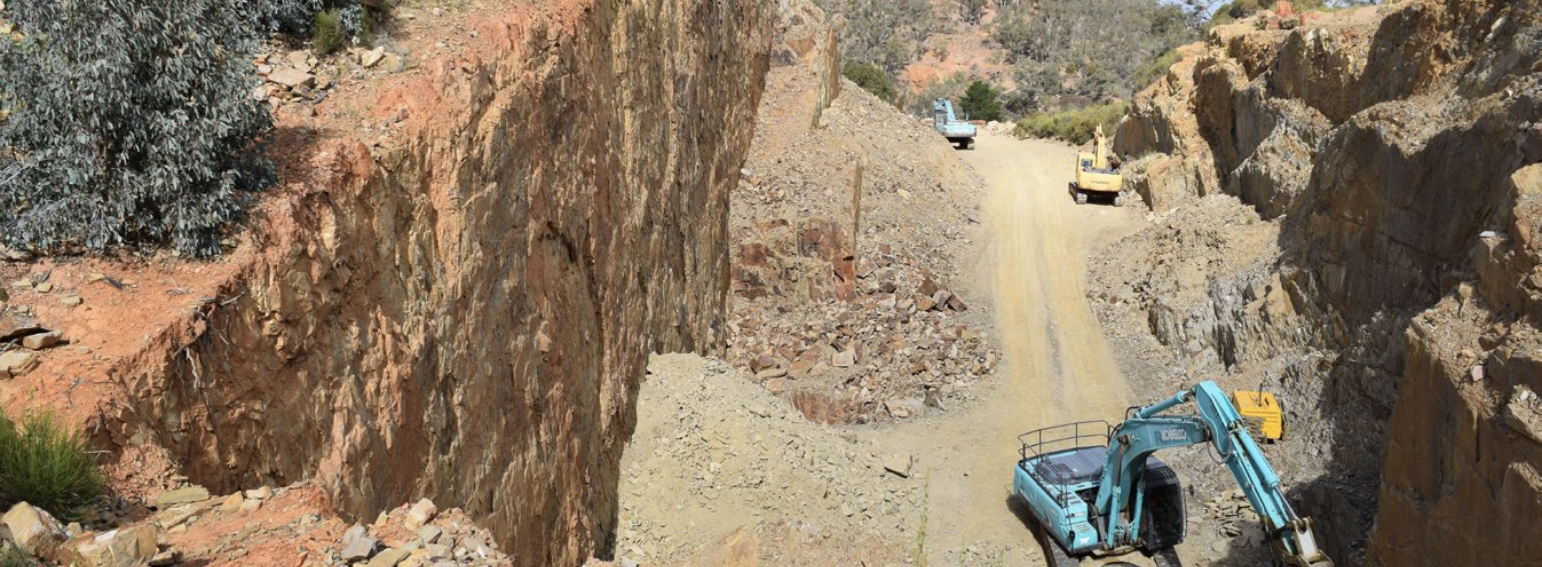
With many years of stone still available in the ground, the Castlemaine Stone Quarry continues to play an important role in Victoria’s landscape and building industries. Through Yarrabee & Castlemaine, this distinctive stone will remain a trusted material for designers, builders, and landscapers for generations to come.