.jpg)

Drifting Sands Sandstone in Dusty Pink and Tan
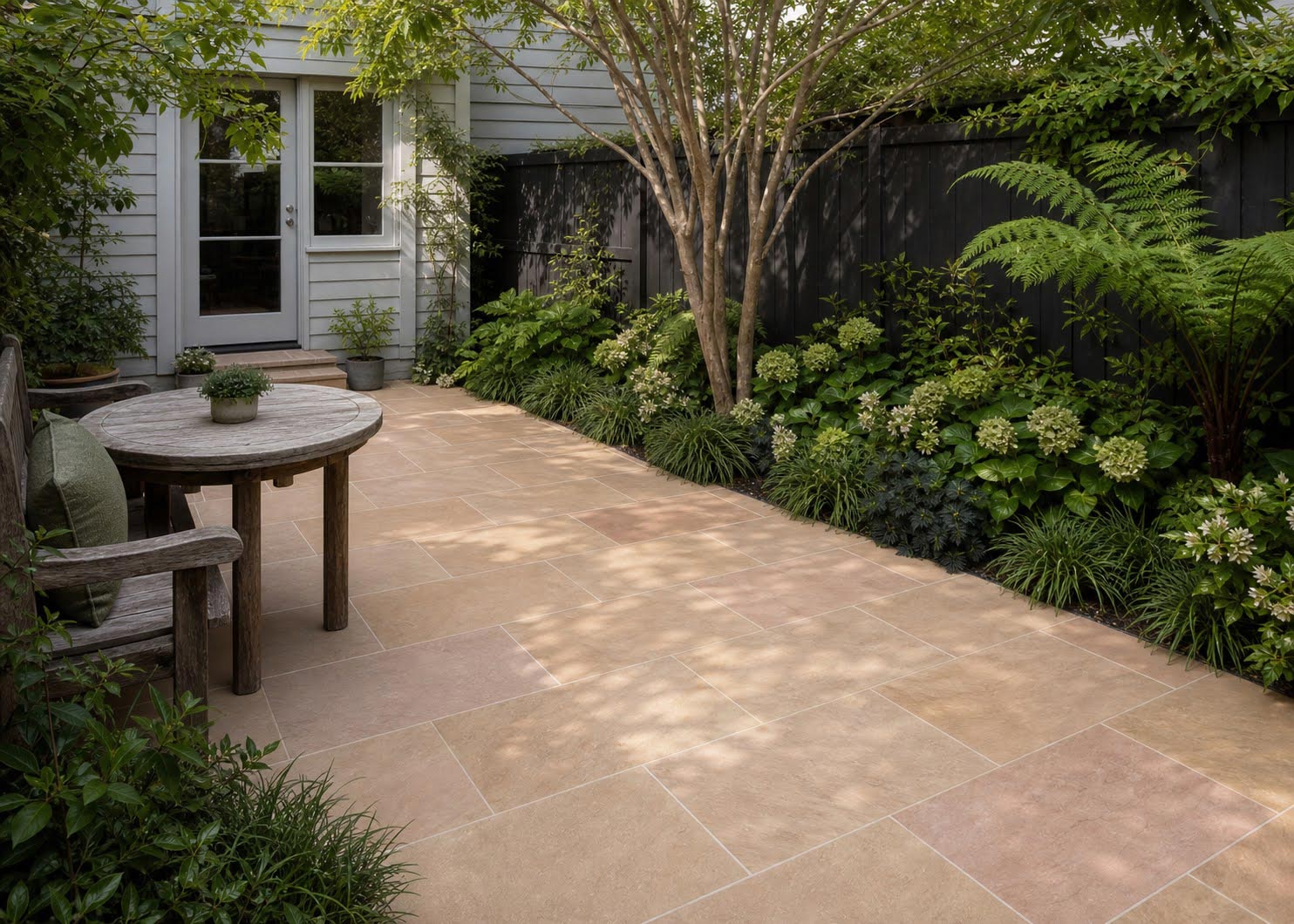
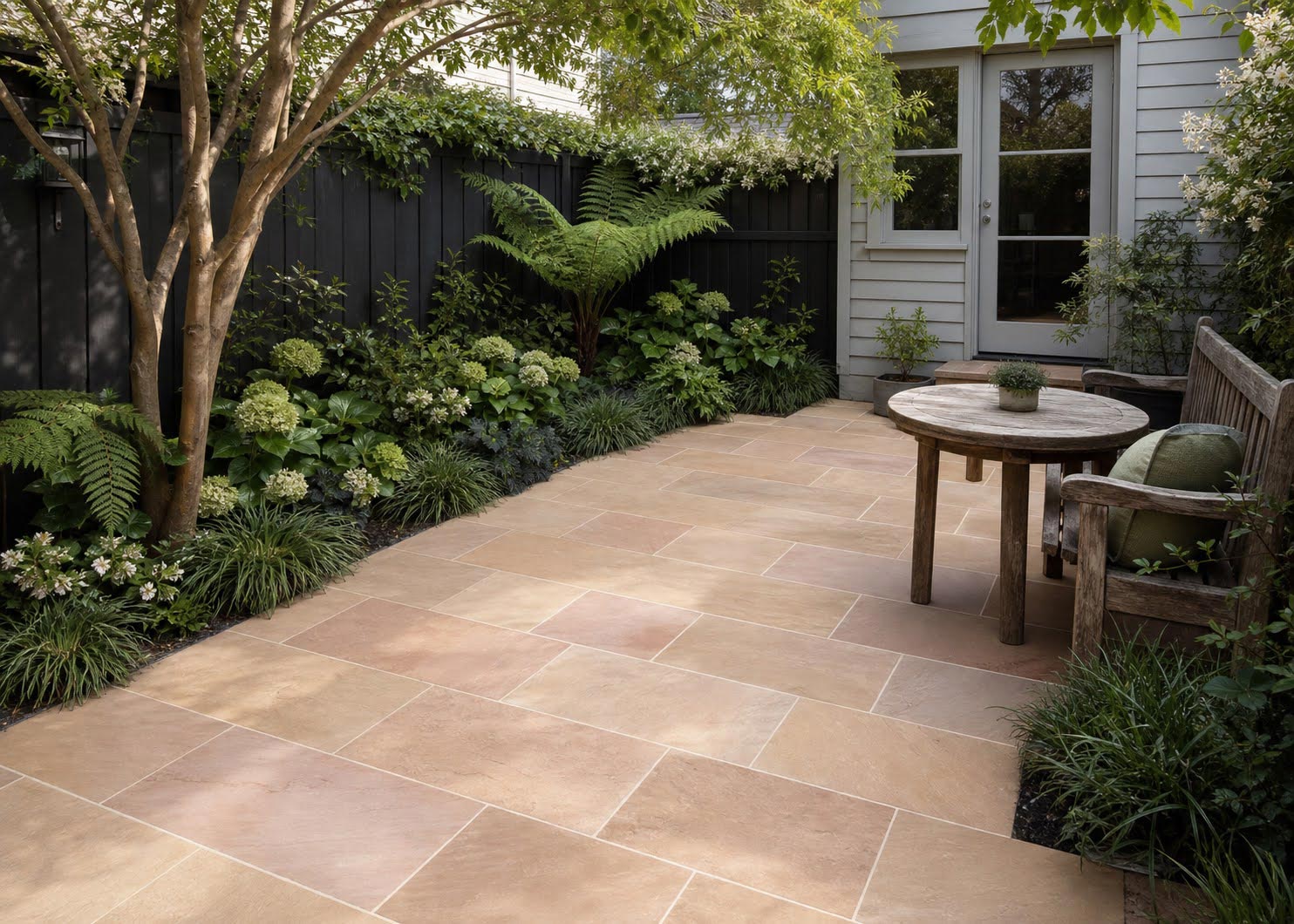
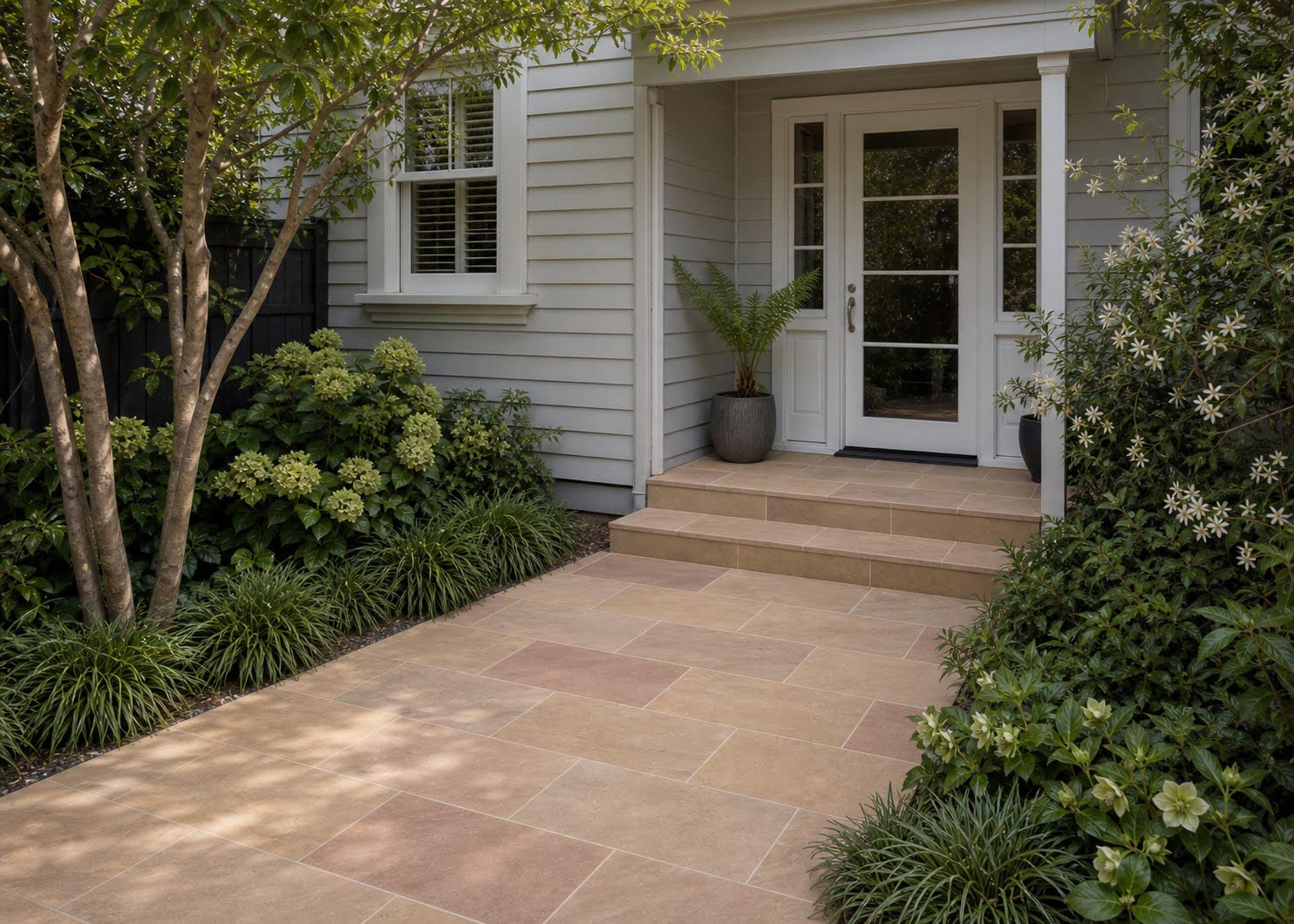
Drifting Sands is an Indian sandstone with a natural split face, left textured rather than honed smooth. The colour runs through dusty pink and mauve tones with streaks of tan and gold, laid down in diagonal bands that give each piece a sense of movement. It's supplied as tile, bullnose, and dropface coping, with multiple sizes to suit both large-format and detailed applications.
 Product Snapshot
- Natural split face with diagonal banding in pink, mauve, tan, and gold
- Textured finish with genuine grip underfoot
- Sawn edges on tiles and bullnose for clean, fitted look
- Multiple sizes for flexible design options




Description
Drifting Sands is an Indian sandstone with a natural split face, leaving it textured rather than honed or sawn smooth. That split face carries diagonal banding through each piece, with dusty pink and mauve streaks running into tan and gold. The colour shifts depending on light and angle, which is why every piece reads differently. It's one of the more textured sandstones we stock, with genuine grip underfoot that works for pool surrounds, outdoor paths, and feature courtyards alike.
We supply it as tile (13 sizes across two thicknesses), bullnose edging (two sizes at 30 mm), and dropface coping (two sizes for step and pool edges). Tiles and bullnose pieces come with sawn edges for a clean, fitted appearance. The diagonal banding runs in one direction across each piece, so laying patterns can either follow the grain through a space or deliberately mix orientations for a more textured effect.
Sizing and Specs
| Product Type | Size | Finish | Thickness | Supply |
|---|---|---|---|---|
| Tile | 300 × 300 mm | Natural split, sawn edge | 15 mm | Sold individually |
| Tile | 400 × 400 mm | Natural split, sawn edge | 15 mm | Sold individually |
| Tile | 400 × 400 mm | Natural split, sawn edge | 30 mm | Sold individually |
| Tile | 500 × 500 mm | Natural split, sawn edge | 15 mm | Sold individually |
| Tile | 500 × 500 mm | Natural split, sawn edge | 30 mm | Sold individually |
| Tile | 600 × 300 mm | Natural split, sawn edge | 15 mm | Sold individually |
| Tile | 600 × 400 mm | Natural split, sawn edge | 15 mm | Sold individually |
| Tile | 600 × 400 mm | Natural split, sawn edge | 30 mm | Sold individually |
| Tile | 600 × 600 mm | Natural split, sawn edge | 15 mm | Sold individually |
| Bullnose Edging | 600 × 300 mm | Natural split, sawn edge | 30 mm | Sold individually |
| Bullnose Edging | 600 × 400 mm | Natural split, sawn edge | 30 mm | Sold individually |
| Dropface Coping | 600 × 300 mm | Natural split, sawn edge | 20 mm | Sold individually |
| Dropface Coping | 600 × 400 mm | Natural split, sawn edge | 30 mm | Sold individually |
FAQ's
Is Drifting Sands slippery when wet?
No. The natural split finish provides excellent grip underfoot, even when wet. This is why it works so well for pool surrounds and outdoor paths where wet feet are common. The textured surface is naturally slip-resistant compared to honed or polished finishes.
What's the diagonal banding and can I control how it looks?
The diagonal banding is natural striations of colour running through each piece — dusty pink, mauve, tan, and gold. Because the banding runs in one direction across each piece, you can choose how to lay them. You can follow the grain through a space for a more linear, flowing look, or deliberately mix orientations to create a more textured, broken-up appearance. Both approaches work well depending on your design intent.
What's the difference between the 15mm and 30mm tiles?
Both thicknesses are available in most sizes. The 15 mm tiles are lighter and suitable for most residential outdoor applications. The 30 mm tiles are thicker and more durable for high-traffic areas or where you want extra structural performance. You can mix the two thicknesses in the same project if you're combining different format sizes, but check with your installer on how to handle transitions between the two.
What formats work best for pool surrounds?
For pool edges, use the bullnose edging (600 × 300 mm or 600 × 400 mm at 30 mm thick), which has a rounded edge for safety and comfort. For the pool deck itself, the larger tiles like 600 × 600 mm or 600 × 400 mm create a broader, more defined deck area. The dropface coping works for step edges and raised pool surrounds where you need a finished overhang. All three formats have the same natural split finish, so they integrate seamlessly.
How much colour variation is there between pieces?
Drifting Sands sits in the dusty pink to mauve range with streaks of tan and gold running through. Because each piece has a natural split face, the colour and banding vary piece to piece. This variation is part of the stone's character — no two pieces are identical. When laid, this creates visual depth and richness across a paved area rather than a flat, uniform appearance. Samples are on display in our Oakleigh East showroom so you can see the full range in one place.
How do I clean and maintain Drifting Sands?
Drifting Sands is low-maintenance. Sweep regularly and wipe with a damp cloth or mop for day-to-day cleaning. For stubborn stains, use warm soapy water. Avoid acidic cleaners and harsh chemicals as these can damage natural stone. The split face texture means debris can settle in crevices, so regular sweeping keeps it looking fresh. Sealing is optional but worth considering in high-traffic areas or if the stone is exposed to heavy staining or algae growth.
